Mozart journal
How to make your first electronic track: start with a small arrangement
A practical first-track method for new electronic producers: choose a short musical idea, give it a shape, and finish a version before chasing more sounds.
August 15, 20267 min read

A first electronic track is not a test of how many sounds you can find. It is a chance to make a few sounds mean different things over time. A beat, a low voice, and one musical idea can already be a track when you give them a beginning, a change, and a reason to return.
Choose a constraint that leaves room to finish
Constraints are not there to make a first track feel small. They keep your attention on the musical decisions that will actually teach you something. Choose one tempo, one key centre if you have one, a drum kit, a bass sound, and one main melodic or textural element. Put the rest of the browser away for an hour.
A narrow palette makes every change more audible. When a pad arrives, you know what it changed. When the drums thin out, you can hear the bass take responsibility for the pulse. That clarity is more useful than a project full of impressive but interchangeable options.
Make the first eight bars legible
Begin with the smallest section that states the idea clearly. Let the kick and percussion establish a pulse. Give the bass a simple rhythmic relationship to that pulse. Then write or choose one sound that gives the listener something to follow: a chord shape, a short motif, a vocal fragment, or a changing texture.
If you cannot say what the central relationship is, remove a part before you add one. A first loop does not need to be spectacular. It needs to be clear enough that a later change will feel like a consequence.
Copy the shape before you polish
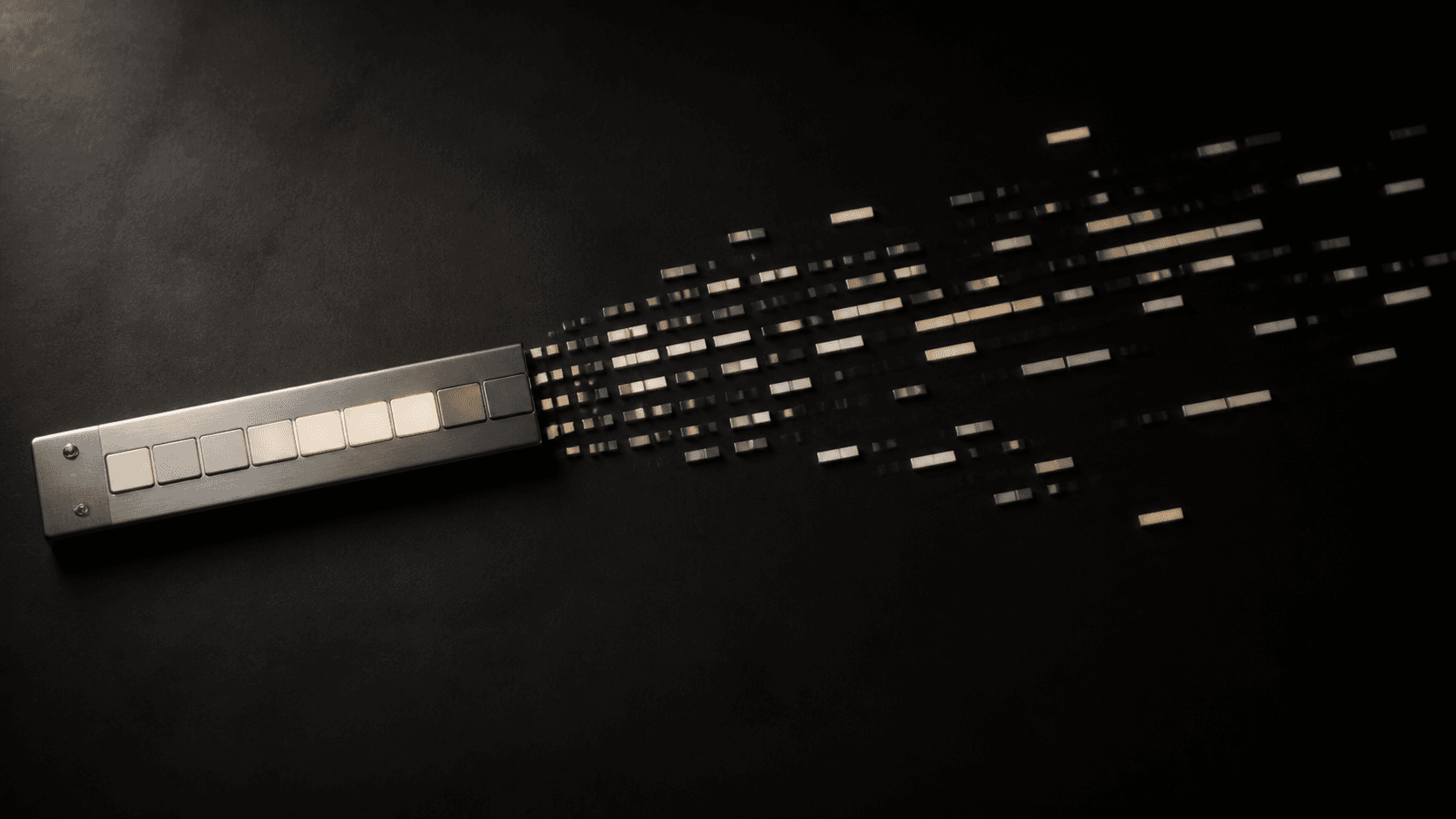
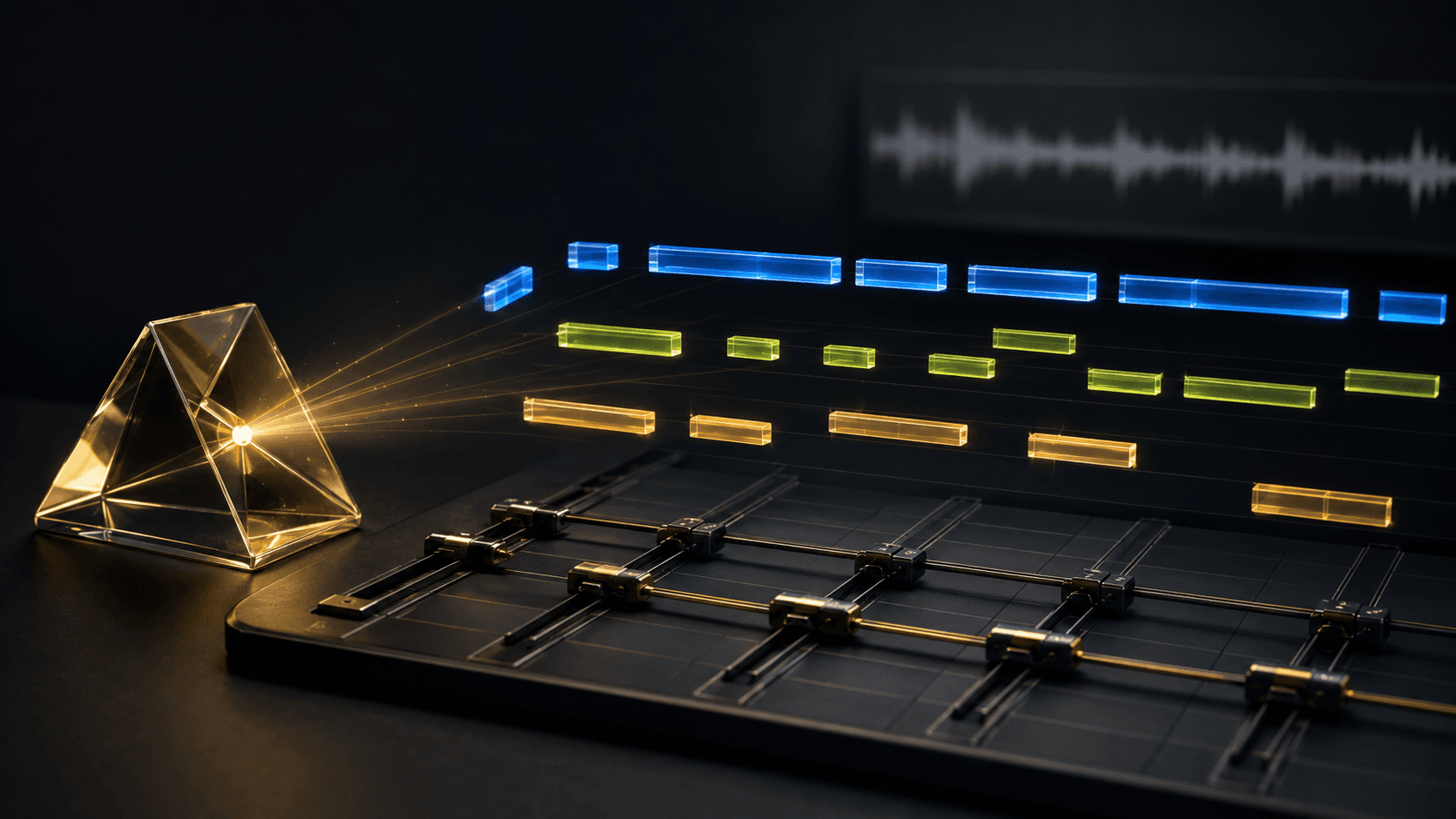
Put the first section on the timeline three or four times before you redesign its sounds. Now you can hear the difference between a loop and an arrangement. Mark an opening, a fuller middle, a quieter or thinner passage, and a return or ending. This map can be plain. It only needs to promise that the track will not answer every minute in the same way.
- Open with less. Let one or two elements announce the world of the track without explaining everything.
- Establish the full idea. Bring in the relationship that made the first loop worth keeping.
- Change the frame. Remove an anchor, shift the register, or alter the rhythmic role of one part.
- Return with a memory. Bring the central idea back, with one small difference that shows the journey mattered.
Create contrast by removing
New producers often look for contrast in another instrument. First, try silence, space, or a change in responsibility. Take the kick away for a few bars and let a percussion part carry the motion. Leave the drums in place but pull the bass back. Keep the harmony while the rhythm becomes more sparse. These changes make the original material feel newly heard.
Removal also reveals which parts are doing real work. If the track loses all energy without one sound, that sound might be an anchor. If it becomes clearer, you have discovered an arrangement decision rather than a mixing problem.
Automate one meaningful change
Automation is most helpful when it marks a decision the ear can follow. Try opening a filter as a section arrives, letting a delay bloom at the end of a phrase, or changing the room around a sound before the drums return. Pick one gesture and make it answer a particular moment in the arrangement.
You do not need movement on every parameter. One good change establishes that time is passing. A collection of unrelated movement can make a first track harder to read.
Export a version and listen away from the DAW
Export before the track feels perfect. Put the file on a walk, play it through one ordinary speaker, or listen once while doing something else. The distance makes arrangement problems easier to hear: an opening that lasts too long, a middle with no shift, or a return that has not earned itself yet.
Write down the next three decisions, then return to the session. Finishing a version is not the end of learning to produce. It is the moment when you can finally hear what to learn next. If your starting point is an eight-bar idea, these arrangement decisions can help it move.
Frequently asked questions
- What should my first electronic track include?
- Keep the palette small: a beat, a bass or low element, one musical idea, and one or two supporting sounds. The important part is giving those parts an arrangement with an opening, a change, and a return or ending.
- How long should a first electronic track be?
- Aim for a complete 90-second to two-minute version. That is long enough to practise arrangement and short enough to finish before every sound choice becomes a new project.
- Do I need music theory to make electronic music?
- No. A clear rhythmic idea and a few notes you can hear in relation to one another are enough to begin. Theory can give names to useful choices later, but it should not stop you from finishing a first version.