Mozart journal
How to start DJing: build your first 30-minute set
A focused path into DJing: choose a small library, learn phrase changes, and build one set you can play from start to finish.
August 15, 20266 min read
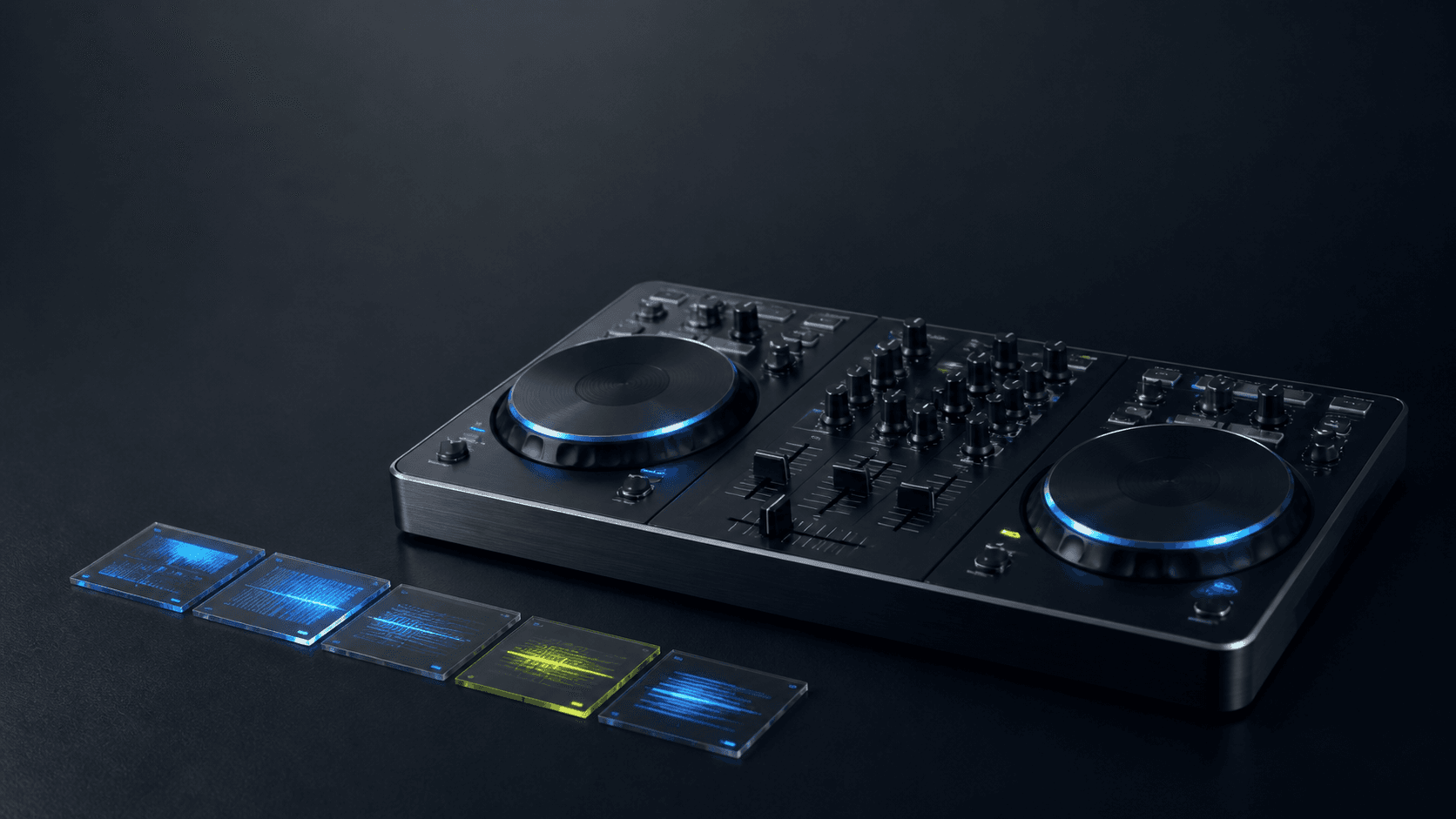
The first thing worth learning as a DJ is how a set holds together. Not how many tracks you own, and not how fast you can touch every control. A short sequence of songs, chosen with care and played from beginning to end, teaches selection, pacing, phrasing, and recovery all at once.
Choose a lane, not every genre
A first DJ library does not need to describe your entire taste. It needs to give you enough common ground that one track can speak to the next. Pick a small neighbourhood: perhaps house between 118 and 124 BPM, a run of leftfield club tracks with the same density, or a handful of songs that share an emotional temperature.
This is not a rule about genres. It is a way to reduce variables while your ears learn the job. When tempo, rhythm, and energy are close enough, you can hear why one record opens a door and another shuts it. Later, wider jumps will become choices rather than accidents.
Build a small library you can hear
Ten tracks that you know intimately will teach more than two hundred tracks you have only previewed. Listen to each one away from the decks. Notice where the drum pattern changes, where a bass line arrives, how long the intro gives you to work, and whether the ending leaves space for the next record.
Give every track a simple role in your notes: opener, lift, reset, pressure, release, or closer. A role is more useful than a star rating because it tells you what a track can do for the room. You are starting to build a language for your own decisions.
Let phrase changes do the work
Beatmatching makes two drums agree on speed. Phrasing tells you when their agreement means something. Most dance music gives you visible landmarks in groups of bars: an element arrives, drops away, or changes its role. Bringing the next track in near one of those landmarks makes the transition sound intentional before you add any flair.
Count enough to feel the pattern, then trust the music more than the arithmetic. You are listening for an invitation. A new section often creates space for a new record. A busy vocal or a full low end often asks you to wait.
Practise transitions in context
Do not rehearse a transition only from its safest eight bars. Start the track before it, play the handover, then let the new track live for a while. That is where you learn whether the energy rises too quickly, whether a low-end swap feels crowded, or whether the next choice has been made for you already.
- Bring the next track in quietly. Match the pulse before you ask the listener to notice a new musical idea.
- Choose one shared job for the low end. Let one track carry the bass while the other arrives, then make the exchange cleanly.
- Stay with the result. Listen to the next minute before deciding whether the transition worked.
The point is not to make every handover invisible. A noticeable change can be beautiful when it follows the shape of the set. What matters is that you can explain why it happened there.
Record a complete pass
Your first recording is a sketch, not a verdict. Do not stop when a mix is imperfect. Keep going. The small recovery after a late cue or an awkward blend is part of learning to play for people rather than for a paused timeline.
Listen back once with a pencil or a note open. Mark only three moments: where your attention woke up, where the energy lost its reason, and where you would choose a different track next time. Those notes become a much better practice plan than a vague feeling that it was not ready.
Learn the room after you learn the set
Reading a room matters, but it is easier once you have a sequence you can play without panic. Share the set with a friend, play it while people are cooking, or put it on in a small gathering. Notice where conversation changes, where someone asks what is playing, and where you stop believing in your own order.
Keep the best parts and make another version. That is how a first set grows: fewer borrowed ideas, clearer ears, and a stronger sense of what you want the next decision to be. If you also want to make your own material, start with a small arrangement you can finish.
Frequently asked questions
- What do I need to start DJing?
- Start with a way to play and cue two tracks, headphones, and a small legal music library you know well. The first useful goal is a short set, not a large collection of gear.
- How many songs do I need for a first DJ set?
- Ten to fifteen tracks is enough for a first 30-minute set, depending on the genre and how long you play each track. Choose tracks that share a tempo range and a compatible energy curve.
- Should I learn beatmatching before building a DJ set?
- Learn the basic beatmatching controls, but practise them inside a real sequence of tracks. Phrasing, track selection, and knowing where a change belongs give the technique a musical purpose.