Mozart journal
How to plan a DJ set: build an energy curve you can still leave
Plan a DJ set with anchors, short energy arcs, phrasing, and flexible branches—so the room can change your route without erasing the story.
August 22, 20268 min read

Plan a DJ set as an energy curve with choices, not a locked playlist. Define the room and your time slot, choose three anchor tracks, then build short three-track arcs around them. Prepare a lower-energy branch and a faster branch so the audience can change the route without erasing the story.
Define the room, role, and time before the tracks
A warm-up in a listening bar, a sunset terrace, a student party, and a closing hour ask for different kinds of attention. Write one sentence: “I receive the room here and leave it there.” That sentence is more useful than a genre label because it names your responsibility.
Do not copy the same energy mythology into every scene. In some rooms, intensity means faster drums; in others it comes from a known chorus, a denser groove, a vocal entrance, or the patience to leave space.
Choose three anchor tracks
Pick an opener that establishes trust, a peak track you can earn, and a final track that leaves the right after-image. They are landmarks, not promises. If the room takes another direction, keep the function and change the title.
Build three-track arcs, not one rigid list
Around each anchor, choose one track that prepares it and one that answers it. A useful arc can rise, hold, or release. Three tracks are long enough to create intention and short enough to replace when the floor gives you new information.
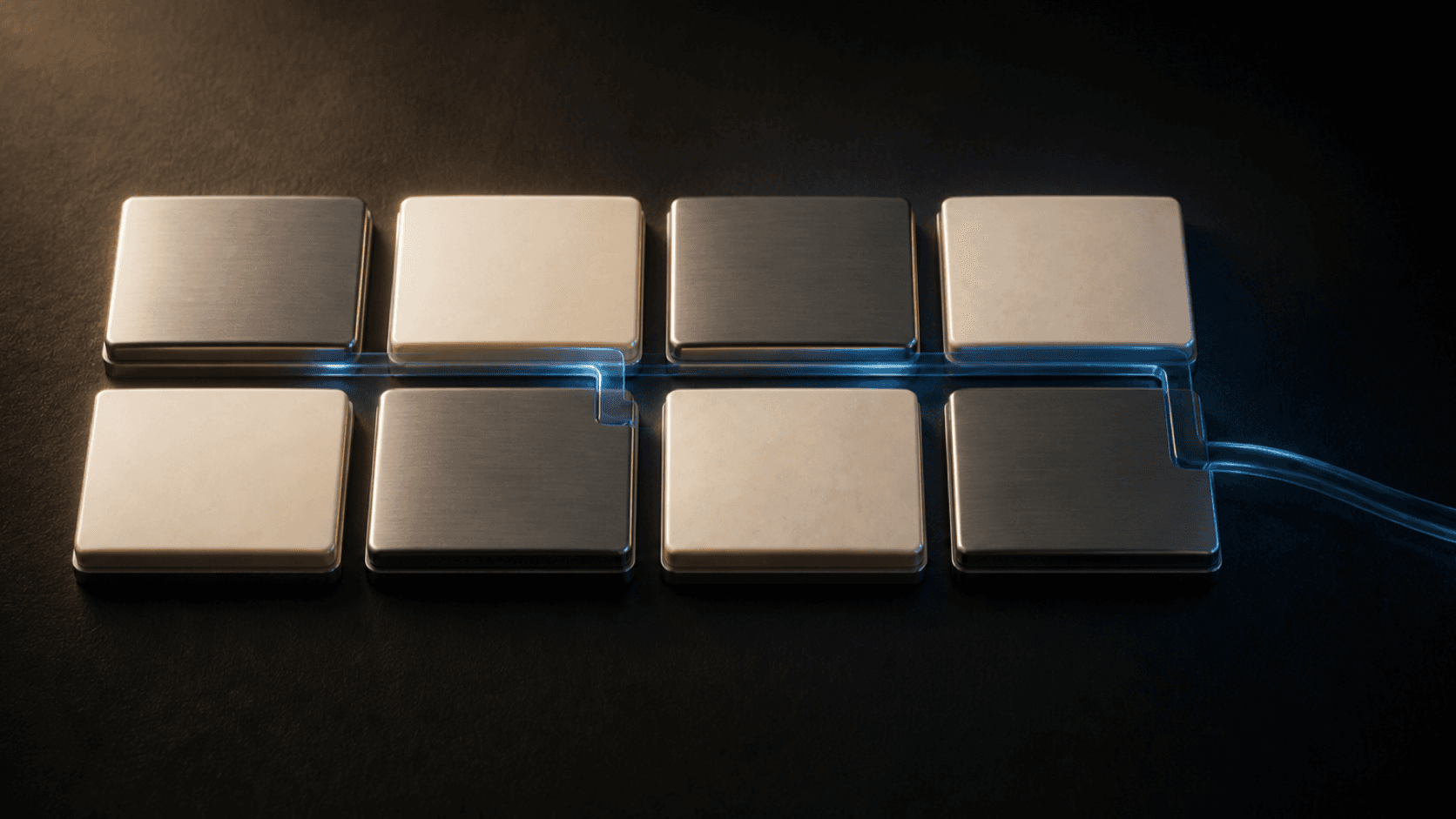
Mozart’s session grid can act as a planning bench: arrange small ideas across scenes, audition changes at musical boundaries with launch quantisation, and keep a selected live input—including a DJ feed—beside your sketches. Use it to hear relationships, not to automate reading the room.
Let phrase boundaries make the transition legible
Count where drums, bass, vocals, or harmony enter and leave. Bringing a new section in at a matching phrase boundary often sounds deliberate before any advanced transition technique does. Eight-, sixteen-, and thirty-two-bar blocks are common in many dance records, but listen to the actual arrangement rather than forcing every tradition into one grid.
Prepare branches for a room that changes
At each anchor, tag one safer continuation, one bolder move, and one release. The safer route keeps the current language; the bold route introduces contrast; the release creates space. This is preparation for attention, not a hedge against having taste.
Record one pass and review decisions, not mistakes
- Write the room, your role, and the energy you should hand over.
- Choose opening, peak, and landing anchors.
- Build two or three short arcs around each anchor.
- Mark phrase entrances and one alternate branch at each turn.
- Record the set and note where attention rises, stalls, or breaks.
Next, use our first DJ set guide to build technique in context, and the 8-bar loop guide to understand how small arrangement changes create motion.
Frequently asked questions
- How do you plan a DJ set?
- Define the room and your role, choose opening, peak, and landing anchor tracks, then organise music into short arcs that rise, hold, or release energy. Prepare alternatives so you can respond to the audience.
- Should a DJ set be planned in a fixed order?
- No. A fixed order is useful for rehearsal, but a live plan should include branches. Keep the intended energy direction while changing individual tracks when the room asks for something else.
- Is BPM the same as energy in a DJ set?
- No. Tempo influences energy, but density, groove, vocals, familiarity, dynamics, and cultural context can make a slower track feel more intense than a faster one.